
 A Certificação ITIL Foundation é uma das mais procuradas por profissionais da área de Tecnologia de Informação no Brasil, sendo muitas vezes a primeira certificação obtida por quem deseja obter esse tipo de qualificação.
Para quem não conhece, a ITIL é, de maneira bem sucinta, um conjunto de melhores práticas a serem adotadas por um organização com a finalidade de melhorar a entrega dos serviços de TI, atingindo assim de maneira satisfatória os objetivos de negócio da área.
A ITIL Foundation é então o primeiro nível de certificação, o mais básico, que cobre os principais conceitos e fundamentos e podem ser adotados por uma empresa e seus colaboradores para atingir tais objetivos.
Como estudar?
Após decidir tirar a certificação, o profissional começa então sua busca pela melhor maneira de se qualificar, e as duas opções mais comuns são um livro ou um bom curso.
Curso ITIL
 Para se preparar, muitos profissionais preferem fazer um bom curso ITIL, com um instrutor experiente explicando e demonstrando melhor cada conceito. Nesse caso, também é possível encontrar em uma pesquisa na Internet vários exemplos e tipos diferentes de cursos, os mais comuns são os cursos presenciais e os cursos online.
Nos cursos presenciais o aluno tem como vantagens o contato direto e pessoal com o professor e os demais alunos, isso é fundamental para muitos. A desvantagem é que gasta-se mais tempo com deslocamento e o preço do curso é mais caro devido às despesas com infraestrutura. Dos cursos presenciais, os mais populares são os da Impacta e os da Ka Solution.
Já os cursos ITIL online são os mais procurados, principalmente pela comodidade de se realizar as aulas em casa ou em qualquer localidade, sem gastar tempo e dinheiro com transporte. Além disso, os cursos são bem mais baratos, variando entre R$ 60,00 e R$ 150,00. Desses os que indicamos são os cursos da TI Exames e os do Renê Chiari pela plataforma Udemy.
Livro ITIL
No caso dos livros, ao fazer uma pesquisa na Internet é possível encontrar várias opções. Entre elas estarão os livros oficiais da biblioteca ITIL, estes livros abordam cada parte do ciclo de vida de um serviço, de maneira detalhada. São recomendados para quem quer entender profundamente a ITIL, não são uma simples preparação para o exame de certificação.
Se por um lado, com os livros oficiais, você terá um entendimento mais profundo do conjuntos de práticas, por outro você precisará de muito tempo para estudar e entender todos os livros, além disso os livros são bem caros, o conjunto com 5 volumes é encontrado por Brasil por cerca de R$ 1.500,00!!! Ou seja, apesar de possibilitar um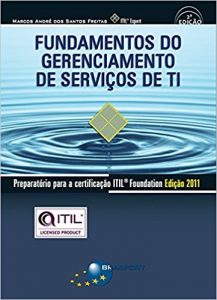 aprendizado profundo, na maioria dos casos são muito mais do que o necessário para quem tem como objetivo maior a certificação.
As melhores opções são os livros que ensinam a ITIL, mas voltados para o exame da ITIL Foundation. Estes são bem mais resumidos e vão direto ao que interessa, tendo um preço bem acessível. É possível encontrar algumas opções, com preços entre R$ 60,00 e R$ 100,00.
O livro “Fundamentos do Gerenciamento de Serviços de TI”, do autor Marcos André dos Santos Freitas é apontado como um dos melhores livros para estes estudos.
Mas Qual Tipo de Estudos Escolher?
Cada pessoa tem suas preferências e no fundo sabem o que funciona melhor. Alguns preferem pegar um bom livro na mão, outros precisam que um professor explique cada tópico. E por que não os dois? É bem comum o profissional assistir as aulas e reforçar com um bom livro.
A escolha entre um livro ou curso ITIL vai sempre depender do método de aprendizagem que faz mais efeito na pessoa. O importante mesmo é tomar a iniciativa, estudar e tirar a tão sonhada certificação.
 Um artigo publicado na ComputerWorld, pelo vice-presidente de cloud computing da IBM Brasil,
  4) Segurança: a computação em nuvem facilitará a segurança.
 No artigo de hoje iremos falar sobre o framework Scrum e principalmente sobre a grande procura pelos cursos e pelas certificações de Scrum Master.
 A Certificação Scrum Master é concedida por diversas organizações oficiais.
 Para obter uma certificação Scrum Master é muito importante que o candidato realize algum curso preparatório, que irá indicar qual o conteúdo aplicado no exame, assim como dar dicas de preparação para cada prova.
 A área de TI é um campo muito vasto e há muito o que se explorar e discutir.
 O objetivo do site também é ajudar quem deseja evoluir em suas carreiras, ou para aqueles que estão apenas começando e precisam de dicas e recomendações interessantes.